



Reproductive Endocrinology and Infertility Training Program
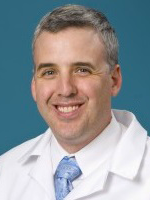
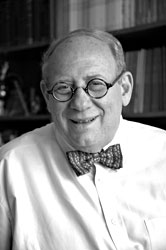
- Micah J. Hill,
DO, Program Director, Combined NICHD/Federal Fellowship in Reproductive Endocrinology - Kate M. Devine, MD, Associate Director
- Alan H. DeCherney, MD, Associate Director, Reproductive Endocrinology and Infertility Fellowship Program
- Torie C. Plowden, MD, MPH, Associate Director
- Lisa Halvorson, MD, FACOG, Chief of Service, Reproductive Endocrinology and Infertility Training Program, NICHD/NIH
- David Boedecker, MD, Clinical Fellow
- Jennifer Chae-Kim, MD, Clinical Fellow
- Ariel J. Dunn, MD, Clinical Fellow
- Allison A. Eubanks, MD, Clinical Fellow
- Kiley Hunkler, MD, Clinical Fellow
- Howard Li, MD, Clinical Fellow
- Peter G. Lindner, MD, Clinical Fellow
- Amalia Namath, MD, Clinical Fellow
- Brooke Neumann, MD, Clinical Fellow
- Selena Park, MD, Clinical Fellow
- Alexandra Poch, MD, Clinical Fellow
- Nicholas S. Pyskir, MD, Clinical Fellow
- Adrianna Vest, MD, Clinical Fellow
The Intramural NICHD Reproductive Endocrinology and Infertility (REI) Training Program sponsors a three-year clinical fellowship in Reproductive Endocrinology and Infertility, which is accredited by the Accreditation Council for Graduate Medical Education (ACGME).
Intra-cytoplasmic sperm injection
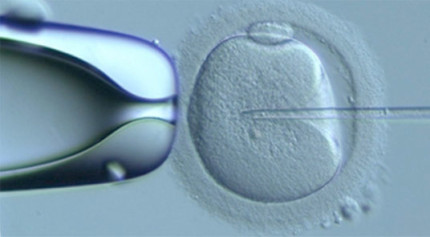
Intra-cytoplasmic sperm injection
Reproductive Endocrinology and Infertility Training Program
Started in 1978, the objective of the Intramural NICHD Reproductive Endocrinology and Infertility (REI) Training Program has been to train Fellows to provide evidence-based, cutting-edge reproductive and infertility care, to advance basic and clinical research, and to become future leaders in academic, government, and military institutions. The program has trained over 100 physicians, who have gone on to become assistant, associate, and tenured professors, and departmental chairs. Requirements for enrollment include graduation from a residency in Obstetrics and Gynecology in the United States that is accredited by the ACGME and an active medical license in the United States. Selection is competitive, and prospective candidates must register with the National Resident Matching Program (NRMP). Three to four fellows per year are approved through a mix of civilian and military graduates of U.S. residencies in Obstetrics and Gynecology. Trainees may meet criteria for the NIH Loan Repayment Program (LRP) for outstanding educational debt. Upon completion of the rigorous scientific, clinical, and surgical curriculum, fellows may apply to the American Board of Obstetrics and Gynecology for certification in the subspecialty of Reproductive Endocrinology.
The Fellowship in Reproductive Endocrinology and Infertility is served by faculty from four institutions: the Eunice Kennedy Shriver National Institute of Child Health and Human Development (NICHD), the Uniformed Services University of the Health Sciences (USUHS), Walter Reed National Military Medical Center (WRNMMC), and the Shady Grove Fertility Center. The three-year training program is structured to capitalize on the particular strengths and resources of each participating institution.
The clinical training is robust. Within the unique environment of the NIH, fellows participate in evaluation and management of rare and challenging endocrine conditions on the NIH Reproductive Endocrine Teaching Service, as well as in seeing patients in conjunction with the Pediatric-Adolescent Gynecology (PAG) Service. Clinical and surgical rotations take place at WRNMMC and the Shady Grove Fertility Center. Experience in Assisted Reproductive Technologies (ART) is provided by rotation in the newly renovated, state-of-the-art Walter Reed Bethesda ART facility and in the Shady Grove Fertility Center.
Research is strongly emphasized. Trainees in the program must complete a thesis project and may choose among any research laboratory in the Institute’s intramural research program or at USUHS. To complete the research project, fellows are given 18 months of protected research time. In the past year, faculty and fellows published over 30 peer-reviewed articles. Over the past five years, each graduate of the program published an average of five peer-reviewed manuscripts associated with the training program, and several trainees received national recognition for excellence in research.
Structured training includes a series of introductory seminars, which take place from August to September of the first year. These seminars provide a historical perspective on the field and basic understanding of the practice of Reproductive Endocrinology. The curriculum also includes a university-level course in biostatistics. The weekly NIH academic teaching conference consists both of presentations by REI leaders outside the NIH-Walter Reed and of discussions of challenging cases with faculty and fellows. Fellows regularly attend ART clinical meetings, during which management of patients pursuing ART is discussed and outcomes are reviewed. NIH Interdisciplinary Endocrine Grand Rounds provide additional training in medical, pediatric, and reproductive endocrine conditions. Regular attendance at a monthly journal club is expected. In addition to larger groups, mentors of individual laboratories to which the fellow is affiliated generally meet on a weekly basis to review research progress. Furthermore, fellows are encouraged to participate in didactic training offered at relevant national meetings and to attend specialty meetings in their chosen interest areas.
Publications
- Outcomes after frozen embryo transfer failure: changing the protocol does not improve live birth. Fertil Steril 2025 125:15-23
- Beyond numbers: AMH and AFC are not independent predictors of embryo euploidy in IVF with PGT-A. Fertil Steril 2025 doi: 10.1016/j.fertnstert.2025:epub ahead of print
- Trends in use of preimplantation genetic testing for aneuploidy before Dobbs, after Dobbs leak, and after Dobbs final ruling. Fertil Steril 2025 124:261-269
- The number of autologous, vitrified mature oocytes needed to obtain three euploid blastocysts increases with age. Fertil Steril 2025 124(3):487-495
- Comparing blastulation of surgically retrieved sperm with ejaculated sperm in donor oocyte cycles. Fertil Steril 2025 124:436-442
Collaborators
- William H. Catherino, MD, PhD, Uniformed Services University of the Health Sciences, Bethesda, MD
- Alicia Christy, MD, Office of Women’s Health, Veterans Administration Central Office, Washington, DC
- Alan H. DeCherney, MD, Professor, Thomas Jefferson Medical Center, Philadelphia, PA
- Veronica Gomez-Lobo, MD, Pediatric and Adolescent Gynecology Training Program, NICHD, Bethesda, MD
Contact
Reproductive Endocrinology and Infertility Training Program
NICHD, NIH
Building 10, Room 8N248
10 Center Drive
Bethesda, MD 20892-1840
Phone: 301-402-2141
Program Director: Micah J. Hill, DO; hillmicah@mail.nih.gov
Program Coordinator: Marilyn Minor; minormar@mail.nih.gov
Program website: https://www.cc.nih.gov/training/gme/programs/reproductive_endocrinology
Online application: https://students-residents.aamc.org/applying-fellowships-eras/apply-fellowships-eras-system